As concerns about a potential economic slowdown continue into 2026, many homeowners, investors, and families are asking the same question: how exposed is my state to a recession?
A recent analysis from Visual Capitalist ranked recession risk by state in 2026, measuring factors like employment stability, income levels, industry diversification, and state financial health. While many states show elevated risk, North Dakota once again stands out as one of the lowest-risk states in the country.
This matters for real estate, cost of living, and long-term financial security. States with lower recession risk tend to experience less housing volatility, fewer distressed sales, and stronger long-term stability.
Source: https://www.visualcapitalist.com/recession-risk-by-state-in-2025/
WHAT THE RECESSION RISK DATA MEANS
Recession risk is not about short-term headlines. It reflects how well a state can absorb economic pressure without widespread job losses, housing instability, or fiscal strain.
The Visual Capitalist study looks at indicators such as workforce resilience, household income strength, exposure to cyclical industries, and government financial stability. States that rely heavily on tourism, tech layoffs, or consumer debt tend to rank higher risk. States with essential industries and strong balance sheets rank lower.
North Dakota consistently falls into the low-risk category.
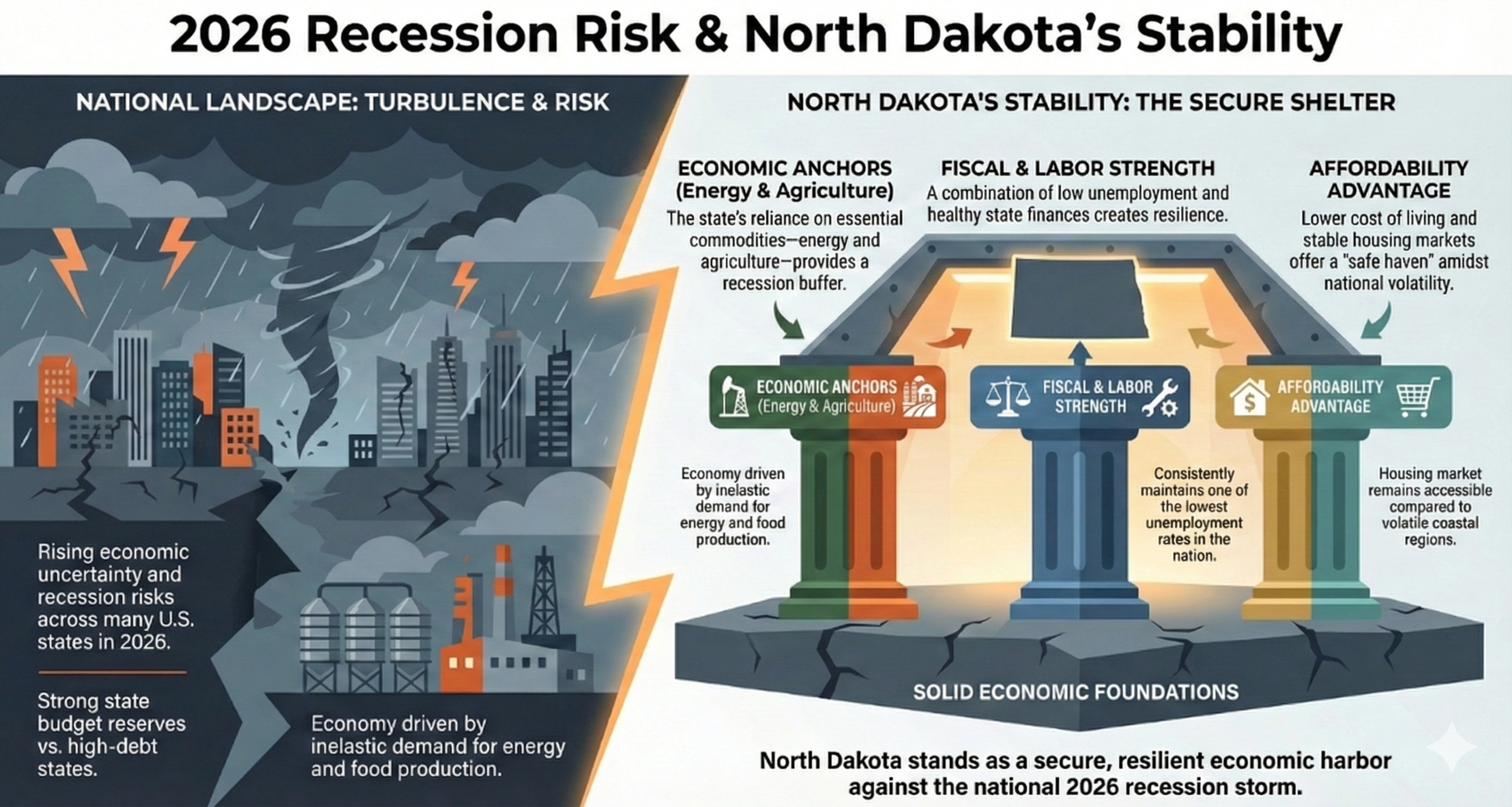
WHY NORTH DAKOTA HAS LOW RECESSION RISK IN 2026
North Dakota’s economic structure is fundamentally different from many high-risk states.
Energy and agriculture remain major drivers, but the economy has expanded into healthcare, logistics, construction, and infrastructure. These are industries that continue operating even during downturns.
North Dakota also benefits from strong state finances, including the Legacy Fund, which helps reduce budget stress during national slowdowns. Conservative lending practices and controlled housing growth further limit volatility.
These factors combine to create a more stable economic environment than most states experience.
HOW RECESSION RISK AFFECTS REAL ESTATE
Lower recession risk typically leads to more stable housing markets.
In states like North Dakota, real estate tends to see fewer foreclosures, fewer forced sales, and more consistent buyer demand during economic slowdowns. Home values may not spike as aggressively as in boom markets, but they also tend to avoid sharp declines.
This stability is especially important for homeowners who want to protect equity and for buyers who want to avoid purchasing at the peak of a volatile cycle.
IS NORTH DAKOTA A CHEAP PLACE TO LIVE?
Compared to the national average, North Dakota remains more affordable, particularly when housing costs are factored in. Lower recession risk helps keep prices aligned with local incomes rather than inflated by speculation.
Residents benefit from shorter commutes, lower congestion, and access to land, which further reduces everyday living expenses.
HOW MUCH DOES A HOUSE COST IN NORTH DAKOTA?
Home prices vary by community, but statewide housing costs remain well below many U.S. metro areas. In Western North Dakota, buyers often find newer construction, larger lots, and strong long-term value at prices that would be unattainable in higher-risk states.
This affordability is supported by steady demand rather than boom-and-bust cycles. See our current listings here: https://www.provenrealtynd.com/currentlistings
IS REAL ESTATE GOOD IN NORTH DAKOTA DURING A RECESSION?
Historically, North Dakota real estate performs better than most during economic downturns. Lower unemployment volatility and stable industries reduce the likelihood of widespread housing distress.
For buyers, this means less competition driven by panic selling. For sellers, it means pricing remains supported by real demand rather than speculation.
WHY PEOPLE ARE MOVING TO NORTH DAKOTA
Many people are relocating to North Dakota for job stability, affordable housing, and long-term economic resilience. In a time when uncertainty dominates national headlines, North Dakota offers predictability.
Families, professionals, and investors are increasingly prioritizing states that can weather economic cycles without extreme swings.
FINAL THOUGHT
Recessions impact every state differently. According to the 2025 recession-risk data, North Dakota continues to rank among the most stable states in the nation.
That stability directly supports housing values, affordability, and long-term quality of life. For anyone considering buying, selling, or relocating, understanding recession risk is no longer optional. It is a critical part of making informed real estate decisions.
If you want a clear, data-backed view of how these trends affect real estate in Western North Dakota, working with local experts who track both national data and local conditions makes all the difference.